
[ad_1]
The Dwelley family has farmed the fields of Brentwood, Calif., for a century, growing organic sweet corn, cherry trees, and low, leafy green beans some 50 miles east of San Francisco.
During every harvest, the Dwelleys deliver their bounty to grocery stores and wholesale markets throughout the western U.S. With rich soils fed by the Sacramento and San Joaquin rivers, and hot days capped by cool, breezy nights, the region is ideal for growing produce. In recent decades, though, much of the neighboring farmland has disappeared. Strip malls and suburban tract housing have sprouted up as the Bay Area’s population explodes and more farmers leave the business behind. For the Dwelleys, who lease most of their acreage from other families, the pool of available farms in Brentwood is drying up. So, since 2017, they’ve started leasing land slightly farther afield, from a different type of farm owner: a private investment fund known as Farmland LP.
The fund’s managers acquire conventional farmland and convert it to organic operations; they then lease land to farmers growing specialty crops such as berries, vegetables, and wine grapes. Since launching in 2009, Farmland LP has snapped up 5,800 acres across Northern California, including the fertile fields just east of Brentwood, near the city of Stockton. The fund is among a handful of U.S.-based firms, including Iroquois Valley, Dirt Capital Partners, and Grasslands LLC, that are using their financial and farming expertise to remake the American agricultural landscape. All told, Farmland LP owns and manages 15,000 acres in Northern California, Washington State, and Oregon, with total assets valued at nearly $200 million.
John Dwelley, a fourth-generation farmer, grew up selling sweet corn and stone fruit from his family’s tin-roof produce stand on the side of a dusty two-lane highway. Expanding to Farmland LP’s nearby terrain is part of a larger plan to keep the family legacy going, he says, even as Brentwood transforms from an agricultural hub to a suburban boomtown.
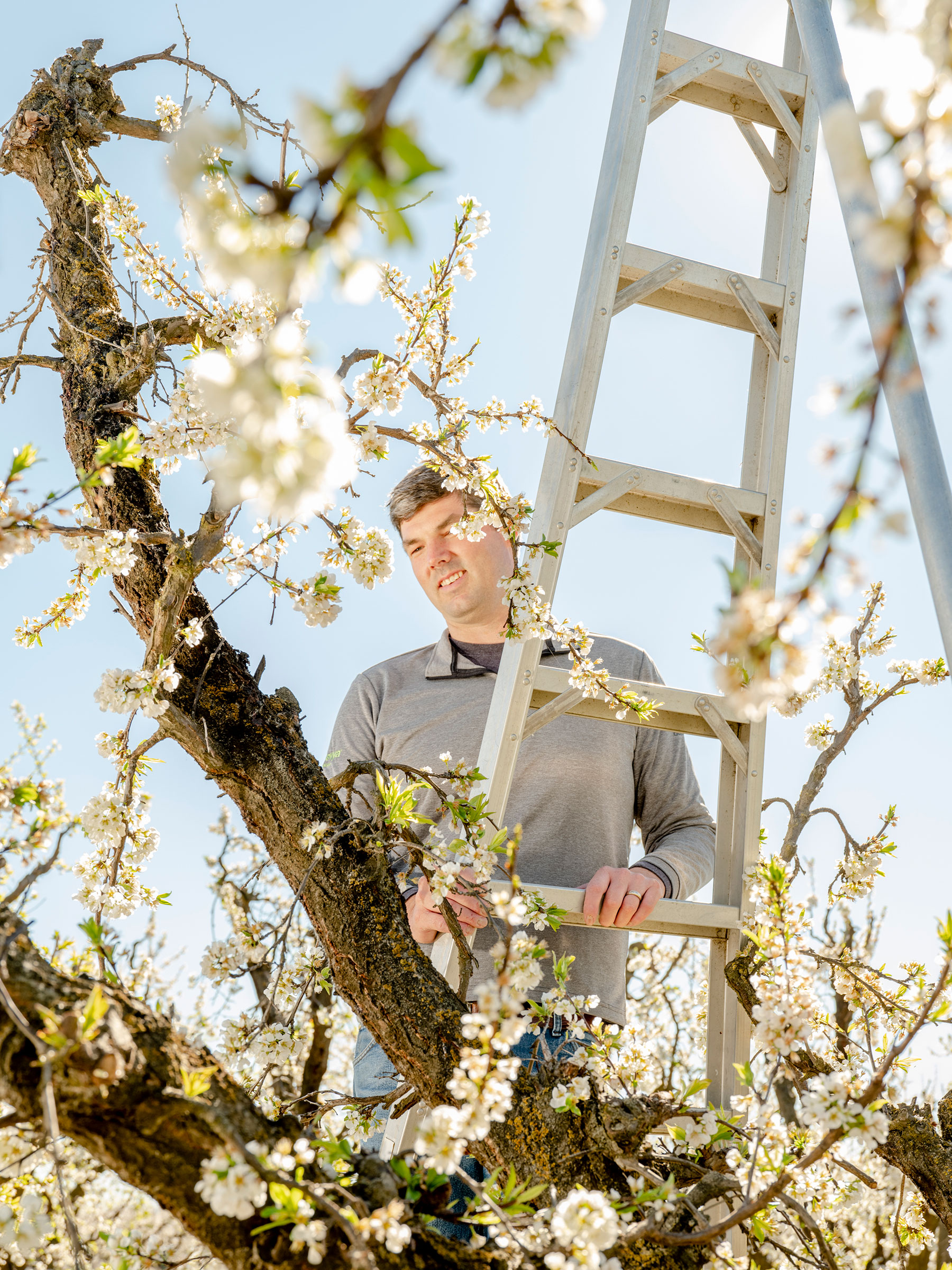
John Dwelley, a fourth-generation farmer, leases hundreds of acres from Farmland LP
Cayce Clifford for TIME
“For my sake, I hope to be farming until I’m a ripe old age,” says the 36-year-old, “so I want to make sure that we’re setting ourselves up for long-term success.” Today the family leases hundreds of acres from Farmland LP on top of the other acreage it owns or leases. Farmland LP, based near San Francisco, says it is working to make more organic acreage available at a time when land for farming and ranching is vanishing nationwide and rising temperatures threaten to disrupt the world’s food supply.
Read More: Climate Change Is Likely to Devastate the Global Food Supply. But There’s Still Reason to Be Hopeful
Tens of millions of acres of farmland have given way to warehouses, big-box stores, and sprawling subdivisions in the past three decades. Small farmers and ranchers—facing mounting debt, rising property taxes, and unstable commodity prices—are losing or leaving their property. With fewer young people following in their parents’ footsteps, older generations are retiring and selling family fields. The nation lost nearly 120,000 farms between 2011 and 2021, according to data from the U.S. Department of Agriculture (USDA).
At the same time, many remaining farms are consolidating into large industrial operations growing a single commodity crop like soy or corn, often using chemical-heavy and water-intensive methods. In some states, excessive fertilizer use is polluting drinking water and contributing to toxic algal blooms, while the large-scale spraying of pesticides has stripped away habitats for bees and butterflies. Overworked soil and thirsty crops are especially vulnerable to drought, heavy rainfall, and other events made worse by climate change.
Farmland LP aims to both preserve existing farms and spare them from industrial monocropping, says Craig Wichner, the firm’s founder and managing partner. Instead, the fund promotes “regenerative agriculture,” an umbrella term for practices that help build healthy soils, improve water quality, and restore local biodiversity. The idea is that healthier plants will produce greater yields of higher-quality crops, so more money flows to farmers—who pay significantly higher rent on organic farmland—and to investors backing Farmland LP’s fund. “Our mission is to demonstrate that regeneratively managed farmland is more profitable than commodity farmland,” Wichner tells TIME.
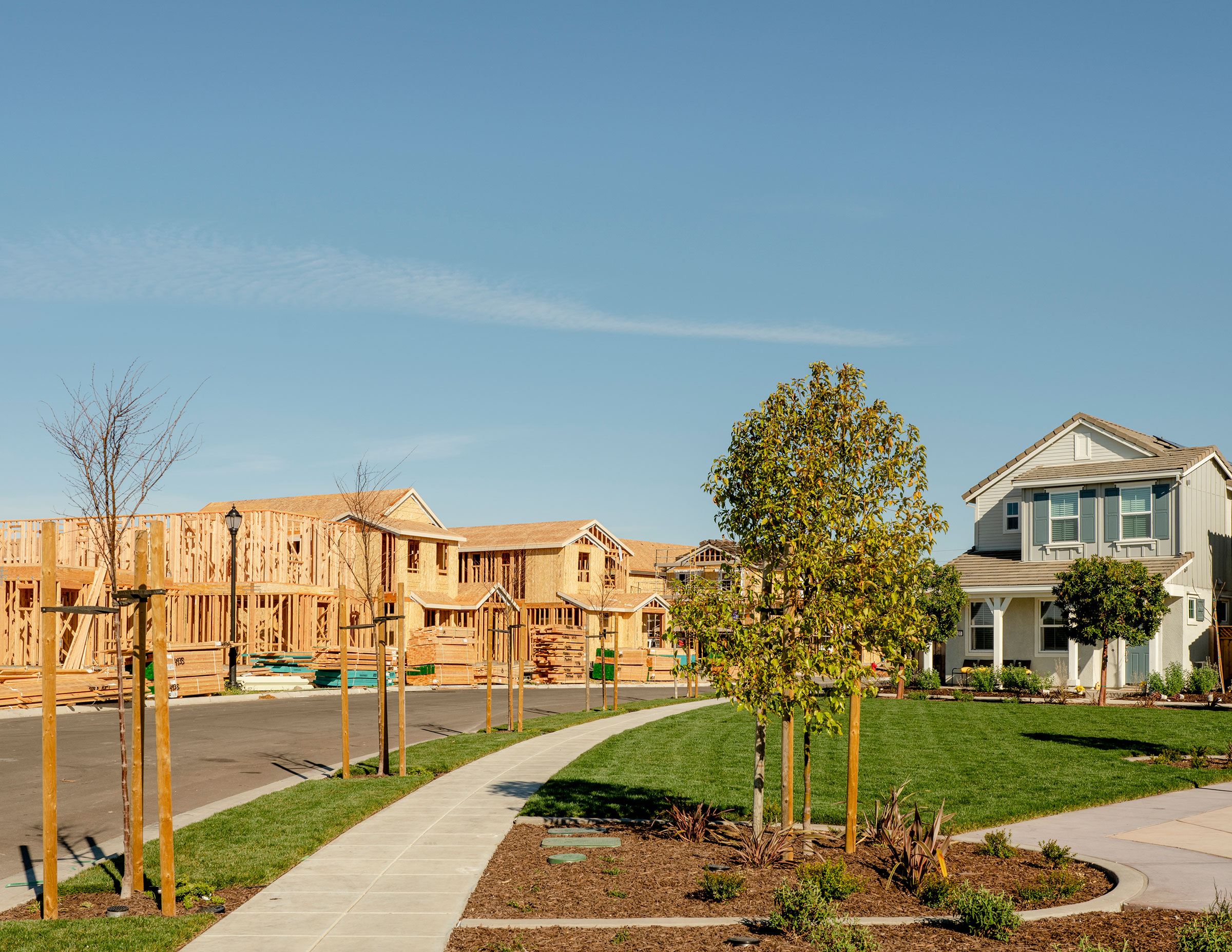
New housing being built in the Bay Area
Cayce Clifford for TIME
Federal agencies and universities are similarly investing in the shift. In February, the USDA launched a $1 billion “climate-smart commodities” initiative to help food producers and forest owners adopt new practices and track carbon emissions.
Farmland LP is far from the only private firm betting on America’s fields and pastures. Despite the financial precariousness farmers face, land itself is an increasingly attractive asset. Prominent billionaires like Bill Gates and Ted Turner are among the largest owners of U.S. farmland. Institutional investors, wealth advisory firms, and individuals are claiming shares of arable land. Unlike the U.S. stock market and housing sector, agricultural land has consistently delivered positive annual returns over the past few decades through rent from farmers, rising land values, and federal subsidies.
Even so, the growing number of investor-farmers is raising concerns about who gets to participate in the agricultural sector, and how. Wealthier enterprises can stomach rising land values, higher rents, and market forces that favor large-scale production. But other would-be farmers are struggling to gain a foothold. That includes young farmers—many of whom are people of color—eager to produce food sustainably to serve their communities, says Holly Rippon-Butler, land campaign director for the National Young Farmers Coalition.
Read More: ‘They’re Trying to Wipe Us Off the Map.’ Small American Farmers Are Nearing Extinction
Such barriers are perpetuating long-standing disparities in U.S. farming, she says. More than 95% of the nation’s 3.4 million agricultural producers identify as white, according to 2017 USDA Census data. Explicit federal policies and practices over centuries barred anyone but white men from owning land, the consequences of which are clear in the current demographics. Black farmers in particular still face discrimination when applying for loans and accessing land, though social impact startups like the Black Farmer Fund are working to remove those barriers.
“We need to start addressing that inequity if we’re going to have a viable future for agriculture in this country,” Rippon-Butler says.
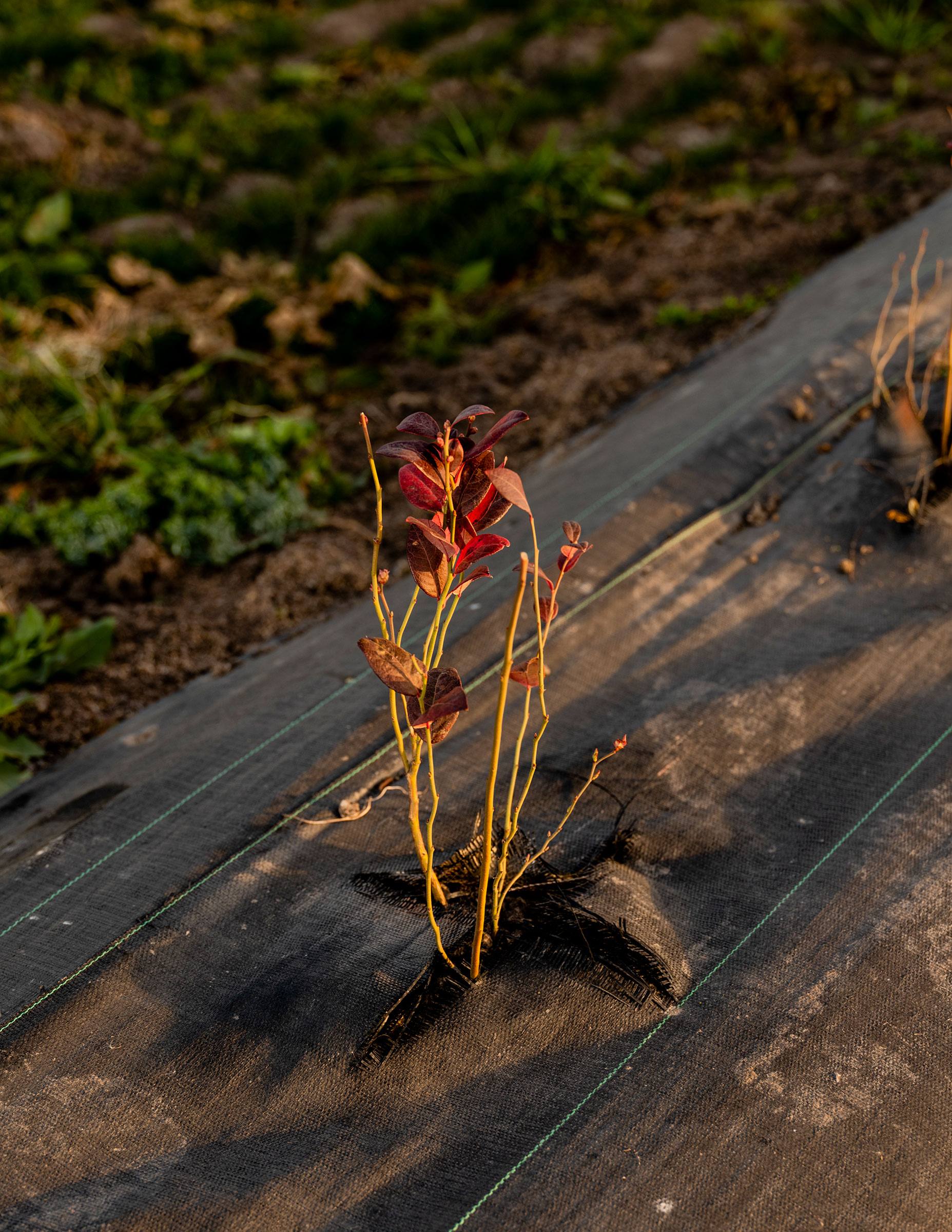
A blueberry plant in Stockton in February
Cayce Clifford for TIME
The investment boom is also accelerating the cultural shift in farming communities away from hands-on, small-scale producers toward digitally managed farm systems with faraway landlords, whose priority is generating returns quickly, says Anuradha Mittal, founder and executive director of the Oakland Institute, a think tank in California. Along with environmental impacts, she says, the push for profits can create a “race to the bottom” in wages and working conditions for farm laborers.
Last summer, after a farmworker from Guatemala died in Oregon’s heat wave, state officials adopted emergency protections for laborers. As temperatures topped 100°F—an extreme event exacerbated by climate change—farmworkers in the Pacific Northwest were still picking cherries, berries, and grapes without access to shade or cool drinking water, according to farmworker unions.
For its part, Farmland LP is a certified B Corporation, meaning its social and environmental performance is measured and verified by the nonprofit B Lab to meet higher industry standards. Its lengthy road to organic farming begins by restoring nutrients and healthy bacteria to the soil. To become certified organic by the USDA, conventional fields must undergo a transition period of three years, starting from the last application of synthetic fertilizer or pesticides.
Frank Savage, who manages Farmland LP’s 5,800 acres in California, says the company usually starts by carpeting fields with a mix of deep-rooted grasses and broadleaf plants whose roots reach down 6 ft. to pull up minerals. It then leases the land to cattle ranchers and sheep farmers, whose livestock come to munch grasses and drop their nutrient-rich manure.
After the three-year transition, Farmland LP’s managers will devise a 10-year plan for rotating crops on a property. That might mean growing vegetables for a few years, then grains, and finally returning the land to pasture for a three- to five-year stretch. The goal is to rotate crops in ways that benefit both soil health and the farm’s economics.
Since organic farmers can’t deter insects or rodents with chemical pesticides, they have to find more natural solutions. “It isn’t as simple as just calling your pest manager out to shoot some chemicals,” Savage says. To curb infestations of moles, which dig deep underground tunnels, his team built raptor perches and owl boxes to attract predators. The farmers also grow long hedges of shrubs, flowers, and other plants to attract pollinators and beneficial insects like ladybugs that devour tiny sap-sucking aphids. Wichner likens their approach to farming as a “mosaic,” rather than the uniform, single-plant fields of conventional farms.
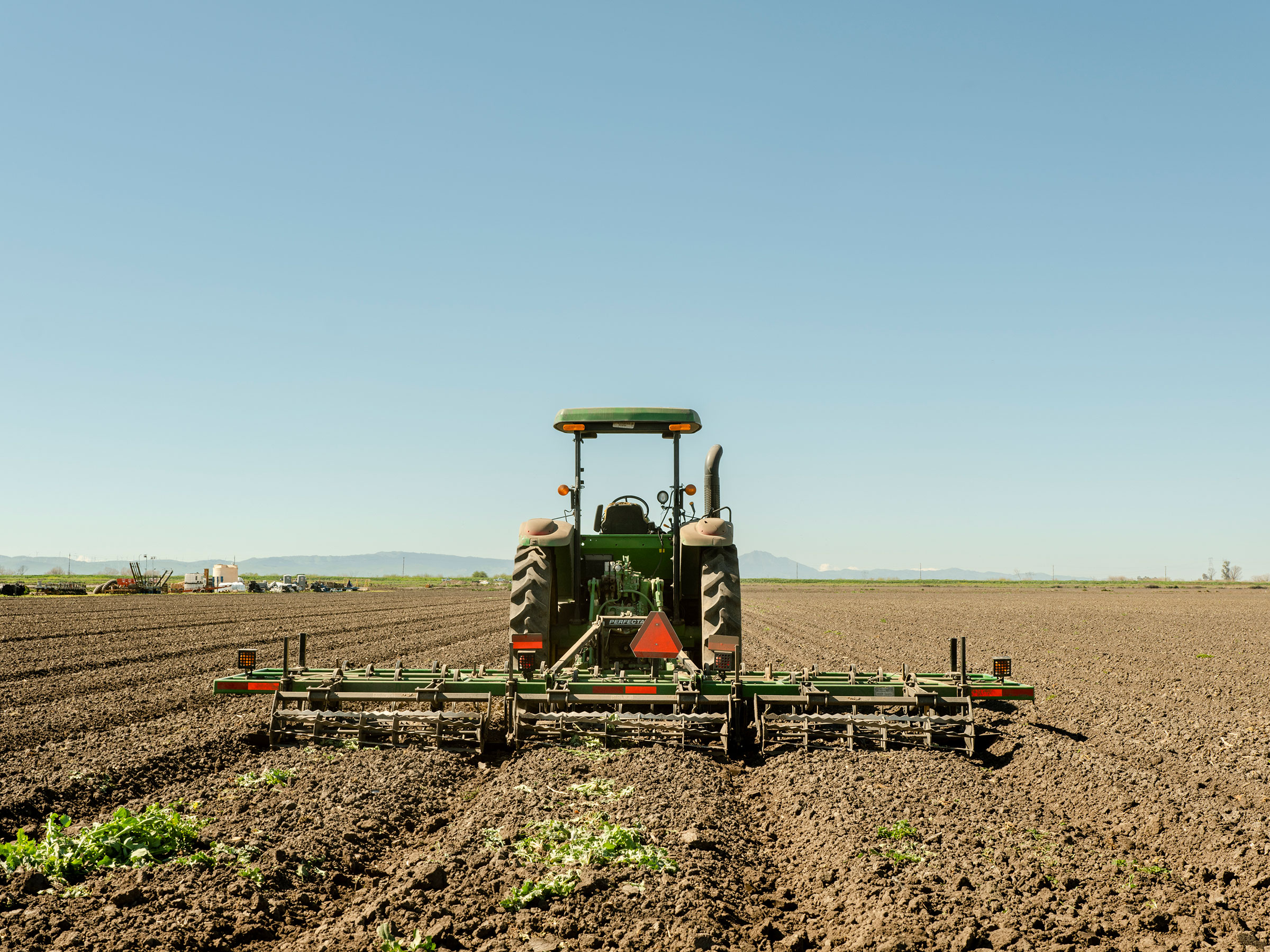
Farming equipment on the Dwelley farm in February
Cayce Clifford for TIME
Farmland LP’s fields also can’t use chemical herbicides. So farmworkers use hands and hoes to manually remove weeds that threaten to choke seeds as they sprout from the ground. The practice- is labor-intensive and time-consuming, and it’s partly why organic produce is more expensive to grow and buy in stores, says Dwelley.
Yet for all the careful planning, many factors remain outside farmers’ control. The past few summers, Dwelley and a crew of 60 workers had to wear masks while harvesting beans, at first because of wildfire smoke, later because of COVID-19, and then because of both at once. In October, Northern California experienced bursts of drenching rain, followed by months with hardly any measurable rainfall at all. For the Dwelleys, the swings in precipitation mean they likely won’t be able to grow as much sweet corn as expected this year.
Still, though every year is different on the farm, demand for food is moving steadily in one direction: up. So is the need to conserve water and maintain soil health as the planet warms and weather patterns shift. To that end, in 2022 Farmland LP is preparing to launch its third and largest investment fund to date, with plans to expand in the Pacific Northwest and other U.S. geographies.
Wichner says the families who sell their acreage to Farmland LP “know that it’s going to be farmed organically and regeneratively for the ongoing future,” and not irrevocably become a parking lot or subdivision. “The sale of that farmland is a really big fork in the road that sets up what happens over the next 50 to 100 years.”
More Must-Read Stories From TIME
[ad_2]
Source link
