
[ad_1]
Question: I’ve noticed some Instagram posts no longer have the number of likes visible anymore. I’ve been considering hiding my likes too, but I’m not sure if that’s a good idea from a marketing perspective. Would doing so impact the way advertisers or customers view me and my business?
Anyone who has ever posted a photo or Reel on Instagram before probably knows the thrill of watching the likes trickle in. Receiving likes from friends, family members, or customers can be a dopamine-filled experience – a validation that whatever you posted onto your grid is satisfactory and appealing to your audience. On the flip side, when certain posts don’t receive as many likes, Instagram users can feel the opposite – like their content isn’t good enough. Low likes on Instagram have also been linked to a rise in anxiety and depression in users, especially teens.
In an attempt to combat the problem, Instagram released the ability for all users to hide likes on posts in 2021. The move has divided the internet, with some users appreciating this new approach and others finding it unnecessary. But for certain small businesses owners – many of whom depend on Instagram, deciding whether to hide their likes might be an especially conflicting process. There really is no clear-cut answer, but here are some things to factor in if you’re considering a life free of Instagram likes.
Creativity can flourish without likes
In 2019, Instagram CEO Adam Mosseri said the whole purpose of hiding Instagram likes was to create a more positive online environment. “The idea is to try and depressurize Instagram, make it less of a competition, give people more space to focus on connecting with people that they love, things that inspire them,” he said. Mosseri seems to be on to something as it turns out for many, taking likes out of the equation does allow for greater self-expression.
More originality
In 2019, when Instagram had first announced they were toying with the idea of no likes, influencer Casey Barker told Esquire that the change might allow him to take more risks as a content creator. “I think I’ll care less about getting the quality right every time and it’ll probably be a more natural feed than a perfect-looking feed … It can be a lot more raw, a lot more myself, rather than thinking: ‘Will people like this?”
According to Dar Meishi, a cognitive neuroscientist, it’s normal for individuals to want to be liked on social media. “We’re hardwired to find social interactions rewarding,” he told PBS. Amassing likes and comments on Instagram gives our brains a dopamine boost, which, consequently, has us all craving more and more likes.
Oftentimes, people get so consumed by this need for validation that they’ll only post photos or videos they believe will please their audiences, essentially stripping away any originality. Cam B, a 20-year-old, told the Huff Post he knows people who’ve deleted Instagram posts solely because they didn’t get enough likes. Long gone are the days when Instagram was a platform for candid and authentic snapshots. A 2020 study found that only 29 percent of users would post an unedited photo of themselves on social media. A Guardian article entitled, “Facetune conquers Instagram,” uncovers how prevalent photoshop has become amongst ordinary users. But, with likes out of the mix, there’s a chance this pressure to be perceived as perfect will diminish.
Sarah Roberts, a 22-year-old, was one of the first to experience an Instagram without likes when the feature was first rolled out for testing in Canada back in 2019 and said it changed her relationship with the platform for the better. “Personally, I love not seeing the like count,” she told HuffPost. “I’ve also been more personal with the things I actually like versus what everyone else is liking. This feels like more of what Instagram should be rather than an advertisement of ourselves on our page.”
The change can be beneficial for small businesses, too. While it may feel safe to post what you already know does well with customers, not tracking the number of likes could allow brands to experiment with different types of content without worrying that followers will automatically judge a post for getting a fewer number of likes.
Highlight quality, not quantity
When Instagram first rolled out testing for hiding likes, users were met with this announcement on the top of their feeds. It reads, “We want your followers to focus on what you share, not how many likes your post gets.” Our eyes often gravitate towards the likes on a post immediately, emphasizing the metrics of the content rather than the substance behind it. This can be seen across all social media platforms: Instagram likes, Reddit downvotes, and YouTube’s dislike button can all act as a kind of groupthink. The more likes a photo gets must mean it’s good while a video receiving tons of dislikes could give off the impression that it’s bad (partly why YouTube made dislikes private). Without this data, users will have to focus on the quality of an Instagram post instead of assigning a quantitative, predetermined value to it.
Whoever is running Instagram product. Give them a raise. #instagramlikes #Insta pic.twitter.com/7OgWpGHmUx
— vikas gosain (@vikgosain) May 2, 2019
In 2021, photographer Brandon Woelfel tweeted about the change in his content that stemmed from using the feature. “Hiding likes on Instagram has me actually posting photos I like… a concept.” Today, most of Brandon’s pictures have the likes visible, but there are a few where he’s chosen to continue to hide likes, including this photo of a woman in a red dress. There’s a noticeable distinction between the posts that have likes and the ones that don’t. The actual shot – the vibrant colors, the model’s nimble pose, the shadowing in the image – becomes the start of the show rather than a bolded number.
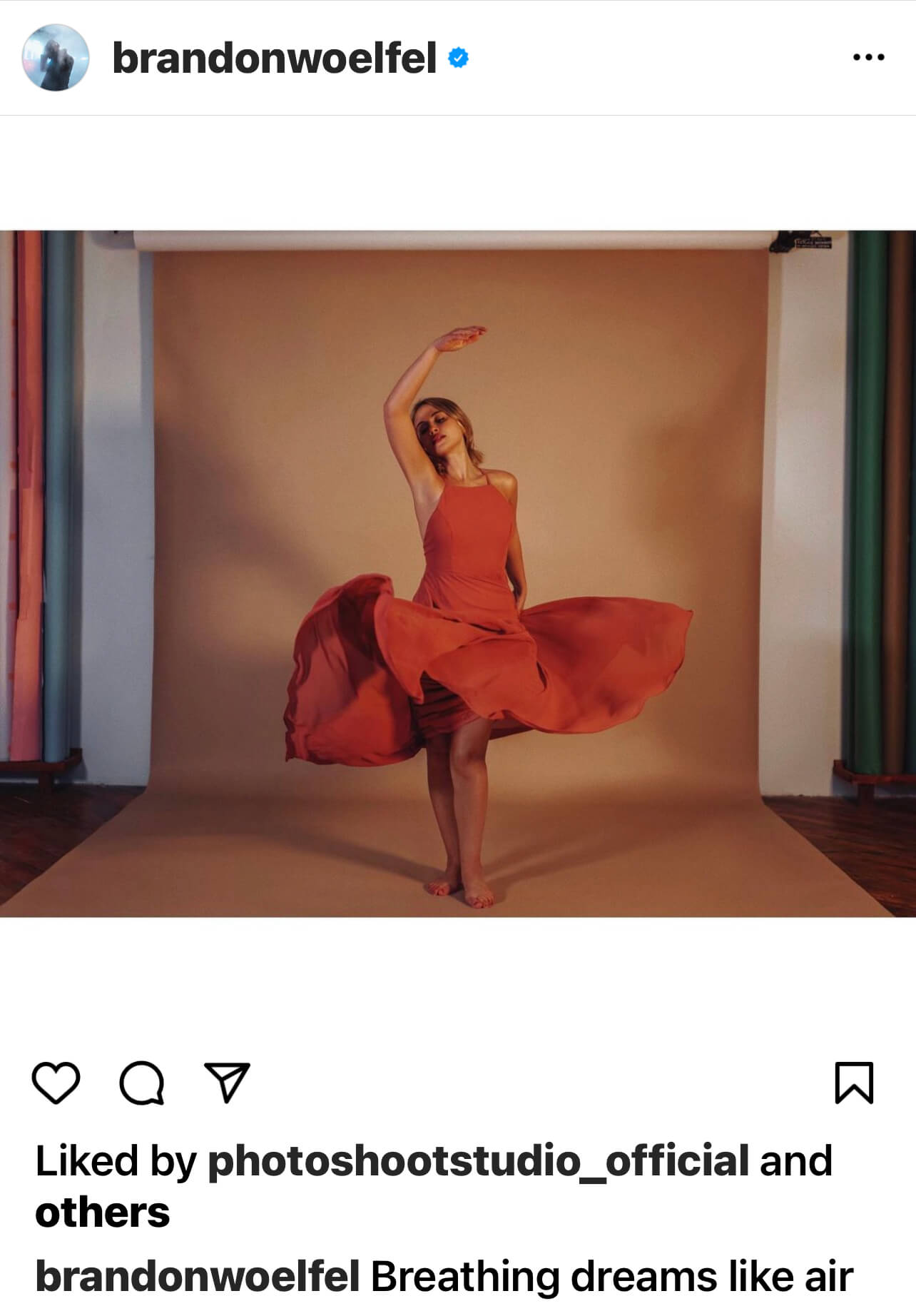
A social media platform without likes can allow users and content creators alike to concentrate on the artistic element behind each post, rather than the arbitrary digits attached to it.
The potential downsides of hiding your likes
While doing away with likes can be beneficial for some, there are certain aspects, particularly from a business perspective, that could be negatively affected if an influencer or small business owner decides to privatize this data.
Partnerships and brand deals can be impacted
When Instagram first announced changing the way likes are displayed, most people immediately questioned how this move would impact content creators and brands who rely on Instagram as both a marketing tool and source of revenue. Oftentimes, large companies decide who they want to collaborate with based on the number of likes a business or influencer receives. And while there are other factors they consider too – follower count, click-through rate, story views, etc. – likes per post are one of the biggest contributors to sponsorship deals.
An early study done by HypeAudtior found that accounts that hid their likes and had between 5,000 to 20,0000 followers, experienced up to a 15 percent drop in likes. Fewer likes, publicized or not, could lead to fewer opportunities to work with advertisers and land sponsorships. Despite telling Esquire that he envisioned a life without likes as a positive change, Casey also said he was hesitant about the move for this very reason. “I just feel like when brands are looking at my page at the minute, the more likes I have in general, the more I think they’ll want to work with me,” he said. Looking at his account today – three years since the interview – his likes are still visible.
But even though likes won’t be observable by the public, the data will still be measured from the backend and can be sent to agencies who are interested in these numbers. According to Ben Jeffries, co-owner of a London-based marketing agency, if more and more people choose to disengage from their likes, however, this could cause a shift in the world of Instagram marketing, “ … what’s really important about it is that it will actively encourage advertisers to stop looking at metrics such as likes as the main important metrics within a campaign,” he said.
This shift could favor smaller businesses that may have a hard time securing brand deals over larger and more popular accounts, essentially leveling the playing field for everyone.
Lack of transparency
In the last few years, transparency between businesses and audiences has been a buzzword – but for good reason. Even founders and CEOs have taken to their personal Twitter accounts to openly share their journey, something most followers appreciate seeing. Along with wanting more clarity, audiences are demanding to know that brands actually stand behind the initiatives they preach. Glossier – a makeup company that markets itself as being diverse and inclusive – was called out for the alleged discrimination and racism taking place in some of their retail stores by former staff members who formed a collective known as “outta the gloss.” In a statement, CEO Emily Weiss said the company would email former employees to “invite dialogue with anyone who has additional feedback and ideas to help move us towards our shared vision.” Though this wasn’t enough to assuage everyone, having an open conversation between staff was a step in the right direction for the brand to be more transparent with its own employees and slowly win back the trust of its customers.
One way to easily lose the confidence of customers is by withholding information and data. When platforms like Instagram, Youtube, and Twitter provided the option to limit replies and comments, the move was commended for giving users more agency over their content. But, when big retailers enabled these features, many customers felt like they were being silenced. This tweet from user Isabél calls out brands who limited comments on their posts during the summer of 2020 when the Black Lives Matter movement was at the forefront of online conversation. “Keep watch of the companies that are disabling comments on posts right now, especially when asked about their plans to implement real change, anti-racism & inclusivity within their workplace. They’re silencing important conversations and valid criticism. #BlackLivesMatter”
Keep watch of the companies that are disabling comments on posts right now, especially when asked about their plans to implement real change, anti-racism & inclusivity within their workplace. They’re silencing important conversations and valid criticism. #BlackLivesMatter
— Isabél ❀ (@imtheartistt) June 7, 2020
Just like disabling comments feel suspicious to some, there is a chance privatizing likes could provoke uneasiness in customers. Followers might automatically assume that hiding likes mean there’s something wrong with the content. But one way to be cognizant of your followers’ feelings is to directly ask them their thoughts on hiding likes. You could take to Instagram Stories or make a poll on Twitter and have an open conversation to assure your community your business values transparency.
Hiding likes is still such a new concept for many, and there currently isn’t enough data to judge whether doing so is the right move for brands. However, it does seem like most people – businesses and content creators alike – have chosen to keep their likes visible for now. With that being said, it might take some time for others to feel comfortable ridding themselves of Instagram likes.
But if you’re considering hiding your likes, think about what matters most to you. Keeping your likes visible can lead to more transparency, but there’s also a chance it’s hindering your creativity. Doing a trial run could be helpful in this situation. Turn off likes for a one to two-week period and take notes on whether you observe a change in your engagement and creativity. Are you more open to posting new content? Did you notice a decrease in likes and/or sales? Has your relationship with your followers changed? Once you figure out the answers to these questions, you’ll have a better idea if making the switch to an Instagram without likes is the right move for you and your business.
Have you decided to hide your likes or will you keep likes visible? Let us know on Twitter or Instagram!
[ad_2]
Source link
